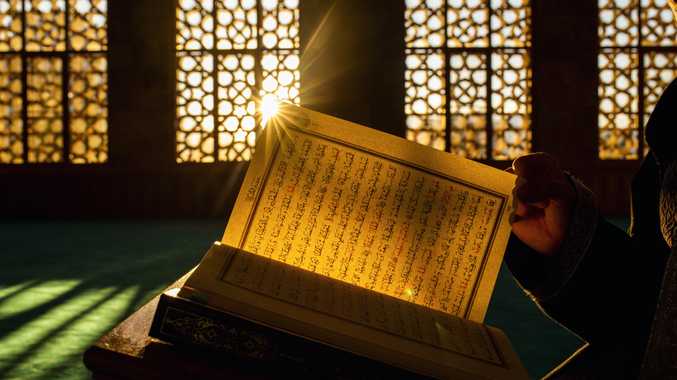

" A Muslim has five rights upon other Muslims: responding to his salam, answering his invitation (to food), making Tashmeet when he sneezes, visiting him when he is sick, and following his Janazah when he dies." (Bukhari and Muslim).
Serving the Muslim Community with Care & Respect
Queensland Islamic Funeral Services (QIFS) was established in 2025 to serve as a dedicated funeral director for Muslim communities across Brisbane. This initiative was formed through a collaborative effort between Brisbane and the Gold Coast Islamic Society burial committee, aiming to provide a more structured and community-focused service.
Previously, these services were outsourced until 2025. Today, QIFS offers a complete range of funeral arrangements with care, dignity, and adherence to Islamic principles.
Our services include the transportation of the deceased from homes, hospitals, or mortuaries to designated mosques or ghusl facilities, where the ritual washing (ghusl) and shrouding are respectfully carried out. Following this, we arrange the final transportation to the cemetery for burial.
In addition, we coordinate closely with local councils to secure burial sites and handle all required documentation and legal formalities, including the official registration of death with the relevant government authorities.
Funerals in Islam:
In Islam the funeral process is the duty and responsibility of the Muslim community. It is an obligatory act for at least 1 member of the community to perform this duty ( referred to as Fard-e-Kifayah ) an obligation which if performed by 1 member of the community, then the entire community absolved from the responsibility, and if not then the entire community is accountable to God (Allah) for this mission.
Queensland Islamic Funeral Services (QIFS) was established in 2025 to serve as a dedicated funeral director for Muslim communities across Brisbane. This initiative was formed through a collaborative effort between Brisbane and the Gold Coast Islamic Society burial committee, aiming to provide a more structured and community-focused service.
Previously, these services were outsourced until 2025. Today, QIFS offers a complete range of funeral arrangements with care, dignity, and adherence to Islamic principles.
Our Process
The process involves three essential steps:
Washing & Shrouding the Body
The deceased is respectfully washed, purified, and wrapped in a simple white shroud according to Islamic teachings.

The Funeral Prayer
The community gathers to perform Janazah prayer, asking Allah for mercy, forgiveness, and peace for the soul.

The Burial Process
The body is gently placed in the grave facing the Qiblah, followed by prayers for comfort and eternal rest.
Essentials For Muslim
Islamic Funeral Guidelines & Important Information
All Muslims are buried and there is no cremation after death. There is no need for embalming usually. The Funeral for Muslims takes place as soon as possible, usually within 24 hours after death. Therefore there is some urgency in ensuring that the “Cause of Death Certificate” be available as soon as possible.Your understanding and assistance in fulfilling this important rite will be highly appreciated. (Note to Nursing Home or Doctor regarding “Cause of Death Certificate) Post-mortem’s are not permitted, unless essential for medico-legal purposes. The information on our site is to provide a general overview of Muslim funerals and the services available through QIFS .
We are happy to provide further detailed information to you, your committee, to Hospitals, Nursing Homes, Emergency Services, Ambulance, Police or other Funeral Directors about Islamic Burial rites and rituals, on request.
Steps in the Embalming
Process for Overseas Transfers:
Legal & Administrative Requirements
The funeral home or embalming service checks local and international regulations for body transport. Necessary permits and documentation (death certificate, embalming certificate, and repatriation permit) are obtained. Airlines and consulates may have specific requirements for embalming and packaging.
Preparation of the Body
The body is placed on an embalming table and cleaned to remove any fluids or external contaminants. Personal belongings are removed (these may be returned to the family). The body is positioned for embalming, with limbs straightened if necessary.
Arterial Embalming:
A disinfecting solution (formaldehyde-based) is injected into the arterial system, usually through the carotid artery, whilst blood is drained from a vein in the neck. This solution preserves tissues and delays decomposition. The embalmer ensures even distribution by massaging the body to help the fluid circulate.
Cavity Embalming:
A trocar (a long, hollow needle) is used to puncture the abdominal and chest cavities. Internal fluids and gases are removed, and a stronger preservative chemical cavity fluid is injected into these spaces to prevent decomposition. The Trocar is used to create tracks in the chest and abdomen for the embalming fluid to reach all spaces, and in the process there will be damage to these organs. During this process there would be damage to the internal organs.
Cosmetic & Restoration Work:
The face and hands may be restored with makeup, creams, or wax for a natural appearance (does not happen for Muslims) The body is dressed in the Kaffan (Shroud). The mouth and eyes are closed
Placement in a Special Casket & Sealing:
For international transport, the body is placed in a bag which is hermetically sealed to prevent leaks. The sealed bag is then enclosed in a wooden transport crate, as required by airlines.
Final Documentation & Transportation:
The embalming certificate is issued and included with the transport documents. The casket is taken to the airport and shipped according to the airline’s regulations. The receiving funeral home at the destination collect the body for final burial.
Islamic Considerations for Embalming:
In Islam, embalming is absolutely discouraged unless required by law or for practical reasons like overseas transport. The body would still be washed (ghusl) and shrouded (kafan), and the Janaza Salah performed according to Islamic rites before repatriation.